Two forms of astrology, two different questions
Astrology is a broad field, and anyone encountering it for the first time soon thinks of the birth chart: the map of the heavens at the moment of your birth. But there is a second, age-old form that works very differently: horary astrology. Both are valuable, yet they answer an entirely different question. In this article I explain clearly where the difference lies, so you know which form suits your situation.
The birth chart: the map of your life
A birth chart — also called a natal or radix chart — is drawn up from the exact time, date and place of your birth. That chart is unique to you and stays the same throughout your whole life. It offers insight into your character, your talents, your challenges and the major themes that may unfold across your lifetime.
The birth chart therefore works on the long term and at the level of your personality. It answers questions such as "Who am I?", "Where do my strengths lie?" or "Which patterns do I recognise in my life?". What it usually does not do is give a short, concrete answer to a clearly defined question of the moment.
Horary astrology: an answer to one question
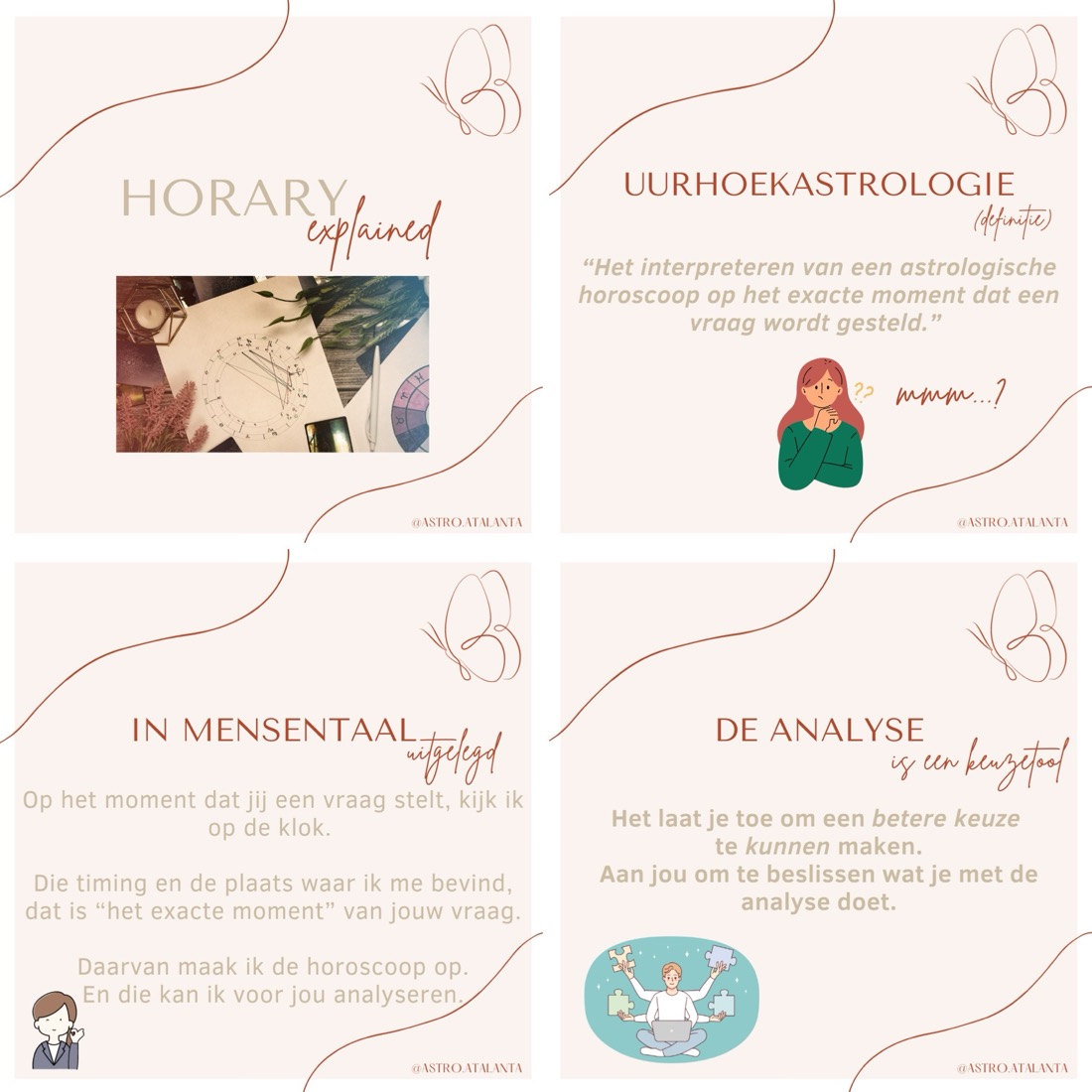
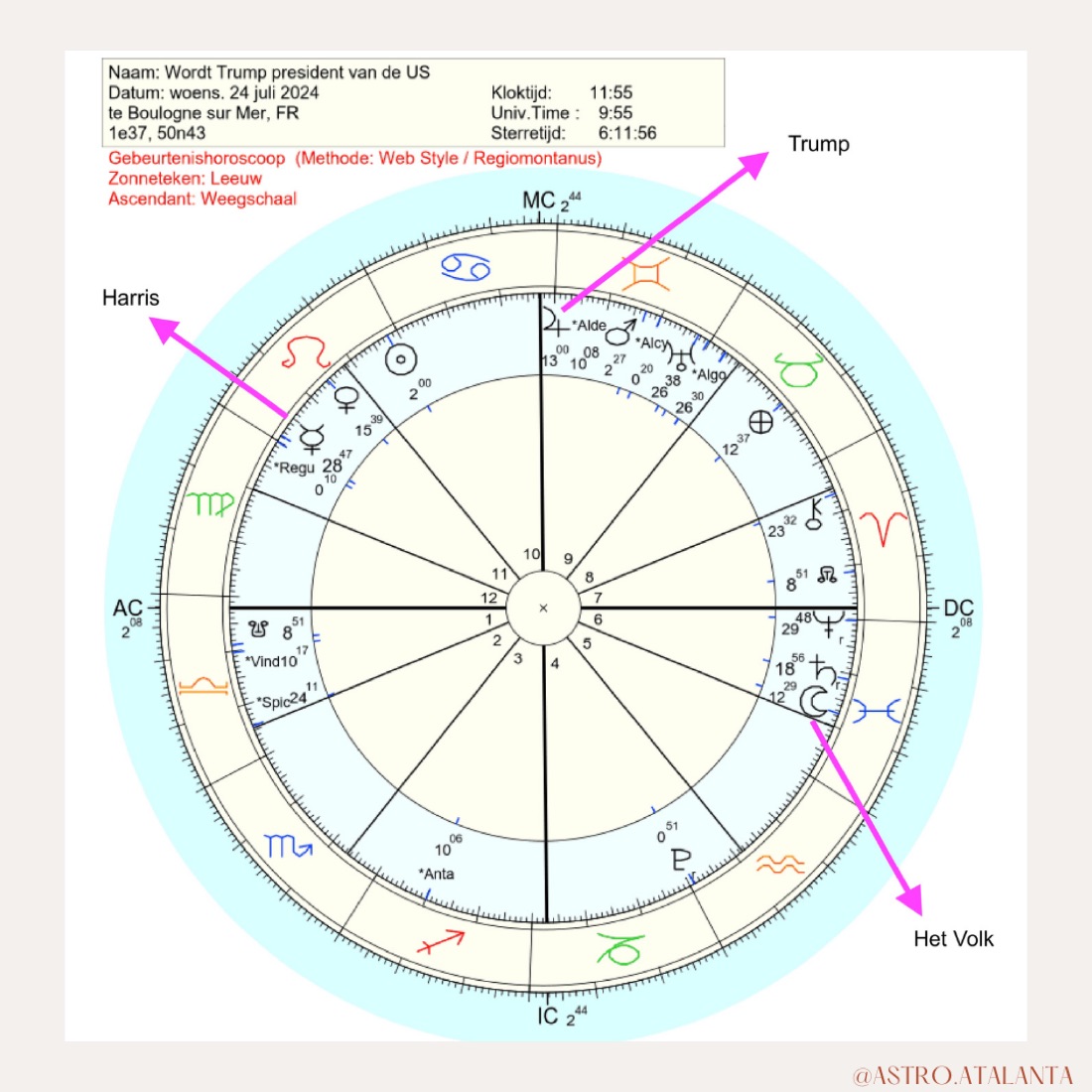
Horary astrology does not start from your birth, but from the exact moment you ask a question. At that instant a chart is drawn, and the position of the planets and houses at that moment tells us something about the situation surrounding your question. You need no birth details for it — only a clear, sincere question.
This technique is age-old and was applied extensively by classical astrologers such as William Lilly and, in our own time, by authors like John Frawley. Its strong point is focus: instead of sketching an entire life story, horary astrology gives a concrete, practical answer to one clearly defined matter. Want to know how that works in practice? On the horary astrology page you can read step by step how a consultation unfolds.
The key differences at a glance
Starting point. The birth chart starts from the moment of your birth; horary astrology starts from the moment of your question.
What you need. For a birth chart you need your exact date, time and place of birth. For horary astrology you need only a clear question — handy if you do not know your birth time.
Type of answer. The birth chart sketches a broad picture of personality and life path. Horary astrology gives a targeted, often yes-or-no-oriented answer with interpretation.
Time horizon. The birth chart looks at the long term; horary astrology at a concrete situation in the here and now.
Best suited for. Choose the birth chart for self-insight and personal growth. Choose horary astrology when you face a concrete choice or question and are looking for clarity.
When do you choose which form?
Suppose you want to understand yourself better, discover your motivations or reflect on the common thread running through your life. Then a birth chart is the way to go. But if you face a clearly defined question — "Is this the right moment to change jobs?", "Does this collaboration have a future?", "Will my runaway cat come back?" — then horary astrology is often surprisingly effective. You do not get a vague, general story, but an answer that matches precisely that question.
Not sure whether your question is suitable for a horary consultation? In the frequently asked questions you will find examples of what you can and cannot best ask.
Can you combine the two?
Certainly. The two techniques do not exclude each other — on the contrary, they complement one another beautifully. Your birth chart gives you the larger framework, while horary astrology helps you through the year at concrete crossroads. Many people discover horary astrology precisely because, alongside general self-insight, they sometimes simply want a clear answer to a question that is playing out right now.
Would you like to put forward a concrete question yourself? Discover how a horary consultation works, or first read the introduction what is horary astrology? ✨
Further reading: How a horary consultation works · Frequently asked questions · What questions can you ask? · How to ask your question well